
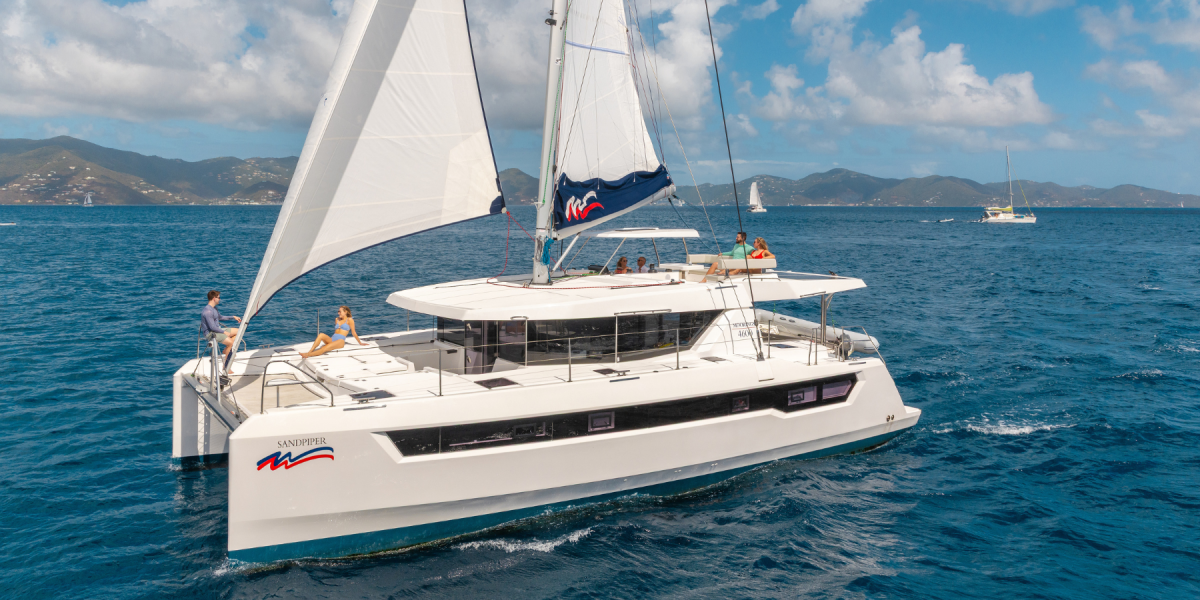
The Best 3-Cabin Catamaran? Meet the Moorings 4200 Owner Version
If you’ve already explored the break-even analysis between yacht ownership and chartering and you’ve learned how guaranteed income yacht ownership works, the next logical question is simple: How much money do I actually need, how does financing work, and what will ownership really cost me?
This article is designed to answer exactly that.
In Short:
Charter yacht ownership typically requires a down payment and financing similar to other large purchases, but the ownership cost structure is very different from traditional yacht ownership. Guaranteed income may offset monthly loan payments, major operating expenses are covered within the program, and owners retain access to the yacht throughout the ownership term.
The good news is that financing a yacht in a charter ownership program is often very different from financing a privately owned yacht. The difference comes down to how owner income, operating expenses, and long-term ownership costs are structured.
Purchase Price: $1,099,000
Down Payment (20%): $219,800
Amount Financed: $879,200
Interest Rate: 6.615%
Loan Term: 20 Years
Monthly Loan Payment: $6,615
Monthly Guaranteed Income: $7,556
Monthly Cash Flow: +$940
Program Length: 57 Months
Actual financing terms, rates, and program details will vary based on lender requirements, program structure, and buyer qualifications.

For many owners, the largest upfront expense is the down payment.
In the Moorings 4600 example above, the initial down payment is 20% of the purchase price, with the remaining balance financed.
While many owners finance their yacht purchase, others choose to pay cash. The right approach depends on personal financial preferences, liquidity goals, and discussions with financial professionals.
It’s important to remember that down payment requirements, loan terms, and interest rates can vary based on lender guidelines, market conditions, and individual borrower qualifications. The examples used throughout this article are illustrative and should not be interpreted as lending commitments or guarantees.

Financing a yacht in a charter ownership program isn’t always viewed the same way as financing a traditional privately owned yacht.
Many conventional lenders understand recreational boats but may have limited experience with charter yacht ownership programs. As a result, owners frequently choose to work with marine lenders that are familiar with charter ownership structures and understand how programs like the Moorings Guaranteed Income Program operate.
For buyers considering financing options, it can be helpful to speak with marine lenders who regularly work with yacht ownership programs.
One example is Azure Funding, a marine-focused lender that provides yacht and boat financing with tailored loan structures and access to multiple funding sources. If you would like more information, you can reach out directly to Tim LeBreux at tim@azurefunding.com.
The Moorings does not require a specific lender, and buyers are encouraged to explore financing options that best fit their needs.
The financing process itself is relatively straightforward. Most buyers first select the yacht model and charter destination that best fits their goals and availability. They then review ownership projections and financing scenarios before placing an option on the yacht. At handover, the purchase is completed, and owner income payments begin according to the terms of the program.

This is the question most prospective owners really want answered.
A common misconception is that yacht ownership means making a monthly loan payment and then covering years of maintenance bills, insurance costs, repairs, dockage, and other operating expenses. That may be true of traditional yacht ownership, but charter yacht ownership operates differently.
Looking back at the Moorings 4600 example above, the monthly guaranteed income exceeds the projected monthly loan payment, resulting in approximately $940 in positive monthly cash flow before personal travel expenses associated with owner use.
Of course, every yacht, financing package, and ownership structure is different. The purpose of the example is not to predict an individual outcome, but to illustrate why evaluating ownership based solely on the loan payment often provides an incomplete picture.

As discussed in our article on Guaranteed Income Yacht Ownership, income payments are established contractually rather than being tied directly to the number of charters booked on your specific yacht.
This distinction matters because it fundamentally changes how many owners evaluate financing.
With traditional yacht ownership, the owner is responsible for generating all value from the yacht while also paying all associated operating costs.
With a guaranteed income ownership program, the owner’s financial picture typically includes:
Because guaranteed income is generally tied to the contract purchase price, evaluating ownership requires looking at both sides of the equation. A lower purchase price may sound attractive initially, but it can also affect guaranteed income payments over the term of the contract.

This is one of the most important differences between private yacht ownership and charter yacht ownership.
During the ownership term, major operating expenses are covered by the program. This includes maintenance, repairs, insurance, dockage, haul-outs, fleet management, and charter marketing.
For many experienced boaters, this represents one of the biggest advantages of a professionally managed yacht ownership program. Traditional yacht owners often spend significant time coordinating maintenance schedules, dealing with unexpected repairs, arranging insurance, and managing marina expenses. In a professionally managed yacht ownership program, those responsibilities are handled for the owner. This aligns with the broader ownership model described in previous program materials and guaranteed income discussions.

Transparency is important, so let’s discuss the expenses that owners should still expect.
If financing is used, the owner remains responsible for the loan and closing costs associated with that. Owners are also responsible for vessel registration requirements, although the USCG registration fee is usually covered in your closing costs if financing.
Beyond that, the primary personal ownership expenses are typically related to actually enjoying the yacht. Owners should budget for travel to the yacht’s (or sister ships’) destination and the nominal turnaround fee (~$500) associated with owner use. Compared to traditional yacht ownership costs, these expenses are modest.
Tax planning is another area where owners may benefit financially and should seek professional guidance. The Moorings does not provide tax advice, and any potential tax benefits should be discussed directly with a qualified CPA or tax professional familiar with your individual situation.

Whenever prospective owners first review ownership projections, a common reaction is surprise.
The reason isn’t that the model is new. It’s because most people compare it to traditional private yacht ownership.
The Moorings has been operating yacht ownership programs since 1969. Over the decades, numerous competitors have attempted to create similar ownership structures, but long-term success requires more than simply offering a charter management program. It requires operational scale, strong charter demand, extensive fleet infrastructure, financial stability, and decades of experience managing yacht ownership programs globally.
The longevity of the program is one of the reasons many prospective owners feel comfortable evaluating ownership as a practical alternative to frequent chartering rather than traditional ownership or repeated charter vacations. This idea is explored further in is yacht charter ownership a smart financial move or just prepaid charters.

As we’ve discussed in earlier articles, people do not typically purchase yachts as investments. They purchase yachts because they love being on the water and because ownership can make financial sense when compared with repeated chartering over many years.
In the sample Moorings 4600 ownership scenario, the estimated value of owner use during the program exceeded $600,000 based on a combination of high-season and low-season usage.
Owners may also have access to sister ships throughout the worldwide fleet and can enjoy up to 12 weeks of use annually, depending on program terms and availability.
When evaluating ownership, it’s important to consider not only financing costs and owner income, but also the value of years spent sailing destinations around the world from a yacht that is professionally managed throughout the ownership term.
Financing a charter yacht should never be viewed in isolation.
The most informed owners look at the entire ownership picture: the down payment, financing structure, guaranteed income, covered operating expenses, owner use benefits, and estimated residual value at the end of the program.
For many frequent charterers, that’s the most meaningful comparison. The question isn’t simply, “Can I finance a yacht?” The better question is, “Does owning a yacht through a professionally managed yacht ownership program make more sense than continuing to charter year after year?”
That’s exactly the question we explored in our break-even analysis between yacht ownership and chartering, and it’s the reason so many frequent charterers eventually take a serious look at ownership.

Katie is the Yacht Sales Marketing Manager for The Moorings Yacht Ownership. She loves to create content that helps buyers understand how ownership works and what to expect along the way.